


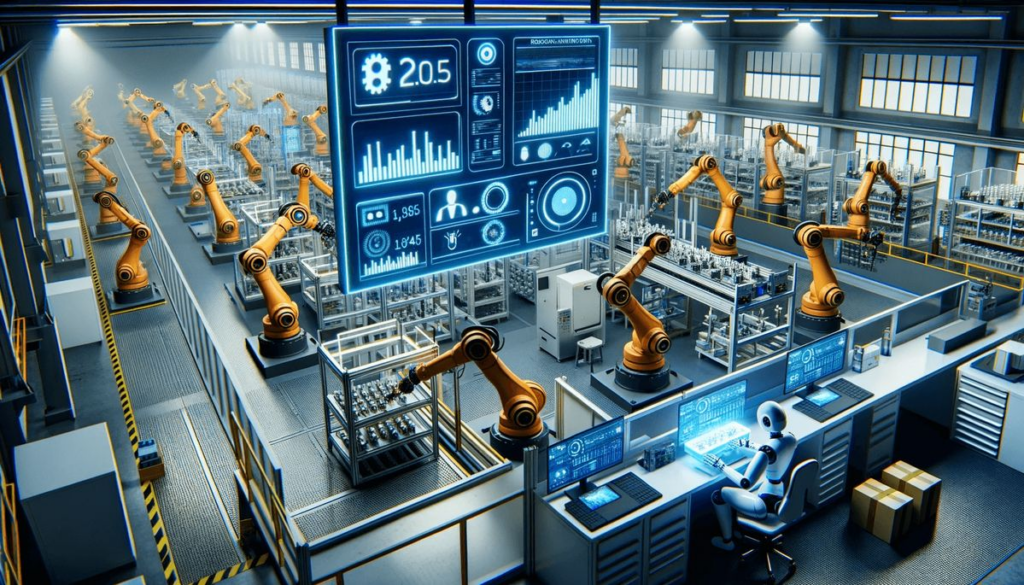
In today’s rapidly evolving industrial landscape, Robotic Process Automation (RPA) in manufacturing is transforming how factories operate. By automating repetitive and time-consuming tasks, manufacturers can increase productivity, reduce errors, and lower operational costs. With high-CPC keywords such as “industrial automation solutions” and “smart manufacturing systems,” businesses are actively seeking tools to stay competitive in the era of Industry 4.0.
1. What Is Robotic Process Automation in Manufacturing?
RPA refers to software-based robots that perform rule-based tasks across digital systems. In manufacturing, RPA is used for data entry, inventory management, purchase orders, compliance tracking, and even customer service processes. Unlike physical robots, RPA bots automate backend operations, making them essential for digital transformation in manufacturing.
2. Benefits of RPA in Manufacturing Operations
The adoption of RPA brings a wide range of benefits, including increased efficiency, 24/7 task execution, and reduced human error. Manufacturers also enjoy better compliance, improved data accuracy, and scalable operations. These benefits drive traffic for search terms like “RPA benefits in manufacturing” and “automate factory processes.”
3. Key Use Cases of RPA in Manufacturing
Common use cases include order processing, invoicing, quality control documentation, and supplier communication. For example, an RPA bot can extract order data from emails, input it into an ERP system, and send confirmation without human intervention. This level of automation appeals to those searching for “RPA use cases for factories” and “automated ERP solutions.”
4. RPA vs. Industrial Robots: What’s the Difference?
Many confuse RPA with physical industrial robots. While robotic arms perform physical tasks like welding or packaging, RPA bots work on digital platforms, handling workflows such as procurement, HR, and compliance. Queries like “difference between RPA and robotics” or “digital automation vs. robotic automation” have high CPC and SEO relevance.
5. Integrating RPA with IoT and AI
RPA becomes even more powerful when integrated with the Internet of Things (IoT) and Artificial Intelligence (AI). For instance, IoT sensors can detect machine anomalies, and RPA bots can automatically trigger maintenance workflows. This synergy drives interest in “smart manufacturing automation” and “AI-powered RPA for industry.”
6. Cost Savings and ROI of RPA
One of the most attractive aspects of RPA is its potential for cost savings. By automating repetitive tasks, companies can reallocate human resources to higher-value roles, improving ROI. Many manufacturers search for “RPA cost vs. benefits” and “ROI of automation in manufacturing,” making these strong CPC drivers.
7. Challenges in Implementing RPA
Despite its benefits, implementing RPA isn’t without challenges. Legacy systems, employee resistance, and poor planning can delay ROI. That’s why terms like “how to implement RPA in manufacturing” and “RPA deployment best practices” often lead to consulting services with high ad value.
8. RPA Software Solutions for Manufacturers
There are several leading RPA tools in the market, including UiPath, Blue Prism, and Automation Anywhere. Each offers customizable workflows, analytics dashboards, and integration with ERP systems. Searches for “best RPA tools for manufacturing” and “UiPath for industrial use” continue to rise in CPC.
9. Compliance and Quality Control Automation
RPA is particularly useful in industries with strict regulations like automotive and pharmaceuticals. Bots can ensure documentation accuracy, track audit trails, and help maintain ISO compliance. Keywords such as “RPA for quality management” and “automated compliance in factories” attract businesses seeking secure and compliant solutions.
10. Future of RPA in Smart Factories
The future of RPA in manufacturing is tied to the evolution of smart factories and Industry 4.0. As more companies adopt digital twins, cloud computing, and AI, RPA will become a foundational tool for seamless, autonomous operations. High-value keywords like “future of RPA in manufacturing” and “smart factory automation trends 2025” are key topics in this fast-growing sector.
